Powernet will be at the upcoming Regina Technical Seminar! Stay tuned, dates and details are coming soon, and we’ll update this post as soon as they’re confirmed.
jenniferleigh
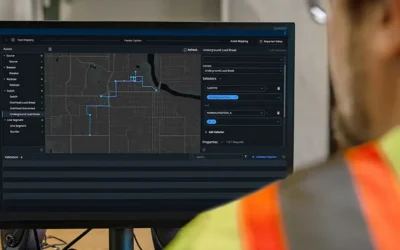
Introducing Our Next-Generation FLISR Solution
The latest solution for fault location, isolation, and service restoration (FLISR) redefines simplicity and reliability in distribution automation.
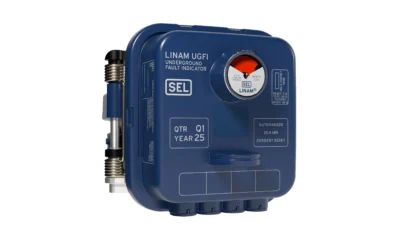
SEL Introduces the LINAM UGFI Underground Fault Indicator
PULLMAN, Washington—Schweitzer Engineering Laboratories recently announced the release of the LINAM UGFI Underground Fault Indicator, a product of the E. O. Schweitzer Manufacturing facility in Lake Zurich, Illinois. The innovative device offers several key features that help distribution system operators reduce the duration of outages by streamlining underground fault locating.
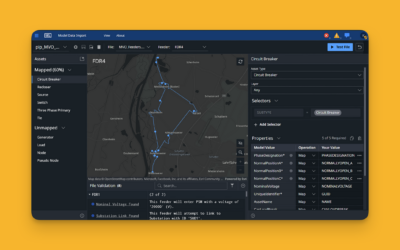
New to FLISR—Automatic Configuration Using GIS Data
SEL recently introduced several enhancements to the Fault Location, Isolation, and Service Restoration (FLISR) application package on the SEL Blueframe platform.
Case Studies on Ground-Fault Protection of Microgrid Power Systems With Diverse Power Sources
In this paper, we share the experiences of designing, installing, and commissioning grounding and ground fault protection systems for several different low-voltage and medium-voltage power systems. The diversity in design of low-voltage power systems, the limitations of inverters, and the requirements of the National Electric Code are explained.
Evaluating Phasor-Based and Time-Domain Elements for Short Line Applications
This paper examines the performance of traditional phasor-based protection and new time-domain elements in short line applications. Protection elements on short lines are ranked from best to worst, and solutions to common problems are presented.
Considerations for the Protection of Adjustable Speed Drive Installations
This paper addresses how to protect an adjustable speed drive installation by breaking the application down into specific components: motor, drive, input mechanism, and feeder. The paper provides a brief background on the advantages and classifications of adjustable speed drives, followed by an overview of considerations for protecting adjustable speed drive feeders at different voltage levels. A real-world adjustable feed drive application fed from a high-voltage source is analyzed. Best design practices for selecting protection parameters are also shared.
Fast and Reliable Load-Shedding Scheme for Wastewater Treatment Plant – A Case Study
This paper presents a case study for a fast and reliable load-shedding scheme (LSS) implemented for one of the largest North American wastewater treatment plants. It highlights the details of LSS algorithms, implementation details, and testing scenarios showing the advantages of deploying the fast LSS.
Solving Complex Feeder Protection Challenges and Reducing Wildfire Risks With Remote Measurements
In this paper, we propose a comprehensive and cost-effective approach to solving protection challenges for complex distribution and subtransmission feeders, including power line-caused wildfires, high-impedance faults, downed conductors, distributed energy resources, and microgrids. Our method uses transmission-grade protection principles made possible through a novel technology of measuring currents and voltages at locations distributed along the feeder without introducing active electronics outside of the substation fence. By allowing instantaneous current and voltage measurements from the feeder, we dramatically simplify and improve protection and control applications. In our approach, feeder protection becomes fast and sensitive and far more selective compared with today’s practice, dramatically reducing wildfire and public safety risks.
Line Current Differential Protection in Systems With Inverter-Based Resources—Challenges and Solutions
This paper presents challenges and solutions to 87L applications in systems with IBRs. The solutions can be used for all 87L applications, but they significantly benefit IBR applications, series-compensated lines, evolving faults, and single-phase tripping applications.
Detecting and Isolating Falling Conductors in Midair – First Field Implementation Using Private LTE at Protection Speeds
When an overhead distribution conductor breaks and the energized wire falls on the ground, it often creates a high-impedance ground fault, which may be difficult or nearly impossible to detect by traditional protective equipment in the substation. This condition presents wildfire risks and public safety hazard. The falling conductor protection solution, based on synchrophasor technology and IEC 61850 Generic Object-Oriented Substation Event (GOOSE), detects and trips the affected circuit section within milliseconds of the break – before the energized conductor falls on the ground.This paper, jointly written by San Diego Gas & Electric Company (SEDG&E) and SEL, discusses the first-of-its-kind Falling Conductor Protection solution implemented on a 12 kV rural distribution circuit with a private Long-Term Evolution (PLTE) network.
Grid-Parallel and Islanding Operation Challenges of a Large Battery Energy Storage System at Cape Cod
Eversource Energy deployed a 38 MWh battery energy storage system (BESS) in Provincetown, MA to improve the power reliability on the outer Cape Cod region.The BESS inverters are operated in grid-forming mode during grid-parallel operation to facilitate seamless islanding and seamless restoration.This paper provides an overview of the project, challenges encountered in designing the protection and control schemes, and the innovative solutions used to address these challenges.
Let’s Talk About Your Next Project.
Connect with our team to address technical challenges, assess system requirements, and provide a proposal with lead times.